HOME
Adhering To Form Only To Transcend It

The Faculty of Letters at The University of Tokyo is Japan’s oldest humanities department. It is comprised of the “three humanities” (philosophy, history, and literature) as well as the behavioral sciences. Each of these four divisions seeks to examine the composition of human thought, transitions in human activity, intellectual expression made possible by human language, and actual human behavior. While each offers its own unique perspective and approach to these questions, they all share a common purpose: the inquiry into man himself.
The Faculty of Letters dates back to 1877, the year the Tokyo Kaisei School and the Tokyo Medical School were combined into the University of Tokyo. From the beginning, the Faculty featured a curriculum that combined Western knowledge with Sino-Japanese scholarly traditions, and efforts have always been made to sustain a system of learning that maintains a balance between these two traditions. The University of Tokyo was later renamed Tokyo Imperial University, and after the war it was restructured under a new system, returning to its original name. The Faculty experienced many expansions and reorganizations throughout these transitions. The current system of dividing the Faculty into the four divisions (initially called sections) was established in 1963. Since then, the Faculty has continued to undergo expansion and reform.
The Graduate School of Humanities was established after the war in 1953, and in 1963 part of it was transferred to the newly established Graduate School of Education. In 1995, the Graduate School of Humanities merged with the Graduate School of Sociology and was reestablished as the Graduate School of Humanities and Sociology. Furthermore, in 2000, two new graduate divisions—Korean Studies and Cultural Resources Research—were added to the school’s curriculum. Even more recently, our newly implemented Death and Life Studies, which aims to examine life from the perspective of death, as well as the Applied Ethics Research program (both of which are comprised of faculty from various fields) have garnered much attention for being ideal models for approaching fundamental questions about life and death from a humanistic standpoint.
These changes were made naturally and in accordance to the overall structural changes in education and research, and are orientated toward the diversity that characterizes our present age. Perhaps this is indicative of the innovative potential inherent in the Faculty of Letters and the Graduate School of Humanities and Sociology. But it is also true that fundamental education and research training are of the utmost importance; in fact, they are the nucleus of our program. Every academic field, of course, has its own particular rules and methodology. The first task of the student is to master those particular methods, and to adapt himself/herself to them. Without passing through this critical phase, the student will never become a first-rate scholar, no matter how much they bandy about slogans of freedom and originality. For example, there is a proper method for reading historical materials; there are also rules for deduction, for research procedure and result analysis, as well as for reading and writing in a foreign language. The word “rules” may sound a bit stuffy; but it is only by adapting oneself to “form” and “rules” that one is paradoxically led to breakthroughs and discoveries. Otherwise we are just setting our eyes high while giving short shrift to the actual labor.
And this applies not only to researchers. Whatever type of occupation one holds after graduation, learning how to think—that is, thought based on “rules” and “form”—is the most valuable and applicable skill you will acquire while in our Faculty.
As of the academic year 2010/2011, there are 926 undergraduate students in the Faculty of Letters. In the Graduate School, 826 graduate students are enrolled, with an additional 57 international research students. Our Graduate School ranks among the highest for its number of international students. My message to the foreign students is essentially the same as my message to the Japanese students: you must learn to use and understand the subtleties of the Japanese language. Since nearly all foreign students who come to our department are deeply interested in various aspects of Japanese culture and have an insatiable appetite for more knowledge, for them the Japanese language—in which Japan's cultural "essence" is most concentrated—is the “form” to which they must adhere.
As I write this, the thousands of people who have lost their towns and houses and families in the areas devastated by the recent earthquake and tsunami are bearing the night's cold as they huddle together in cramped evacuation centers. In the Tokyo area, too, people are concerned about the threat of radiation, and are confused about the situation at the nuclear plants and the resultant rolling black-outs. Given these circumstances, it is understandable if some students might find it somewhat difficult to pursue their studies as diligently as they had before the quake. Some of you may be suffering from a sense of guilt, and feeling overwhelmed by a sense of powerlessness. However, it is precisely in times like these that we urge you to keep sight of your long-term goals and to persevere, even as you reflect on the disaster and its victims. We earnestly hope that you will continue to be as diligent and productive as you have been in the past. Thank you.
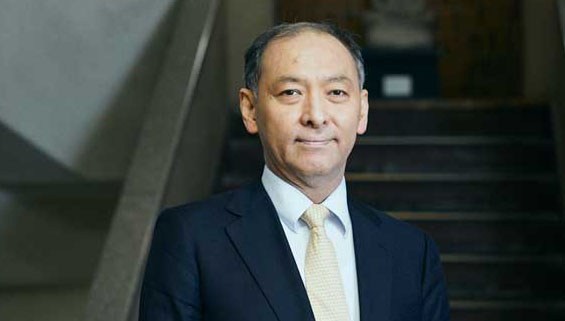
Nakaji Yoshikazu, Dean
The Faculty of Letters and the Graduate School of Humanities and Sociology